Choosing the right undergraduate course after Class 12 is one of the most important decisions for students aspiring to build a successful career in Information Technology. Among the most popular IT courses in India, B.Sc. Information Technology (B.Sc. IT) and Bachelor of Computer Applications (BCA) are often compared by students and parents. Both programs offer excellent career opportunities, but they differ in curriculum, learning approach, technical focus, and future career paths.
If you're confused between B.Sc. IT and BCA, this comprehensive guide will help you understand the differences, career prospects, salary expectations, required skills, and future scope of both courses in 2026. By the end of this article, you'll have a clear understanding of which course best matches your interests and career goals.
What is B.Sc. Information Technology (B.Sc. IT)?
Bachelor of Science in Information Technology (B.Sc. IT) is a three-year undergraduate degree focused on modern information technology, computer systems, networking, cloud computing, cybersecurity, databases, web technologies, and software development. The course combines theoretical concepts with practical learning to prepare students for the rapidly evolving IT industry.
Students pursuing B.Sc. IT gain hands-on experience through programming projects, laboratory sessions, industry assignments, internships, and real-world applications, making them industry-ready upon graduation.
What is Bachelor of Computer Applications (BCA)?
Bachelor of Computer Applications (BCA) is also a three-year undergraduate degree that primarily focuses on computer applications, software development, programming languages, database management, and application development. The course is ideal for students interested in software engineering, coding, and application programming.
BCA emphasizes programming skills and software application development while introducing students to various programming languages and development frameworks.
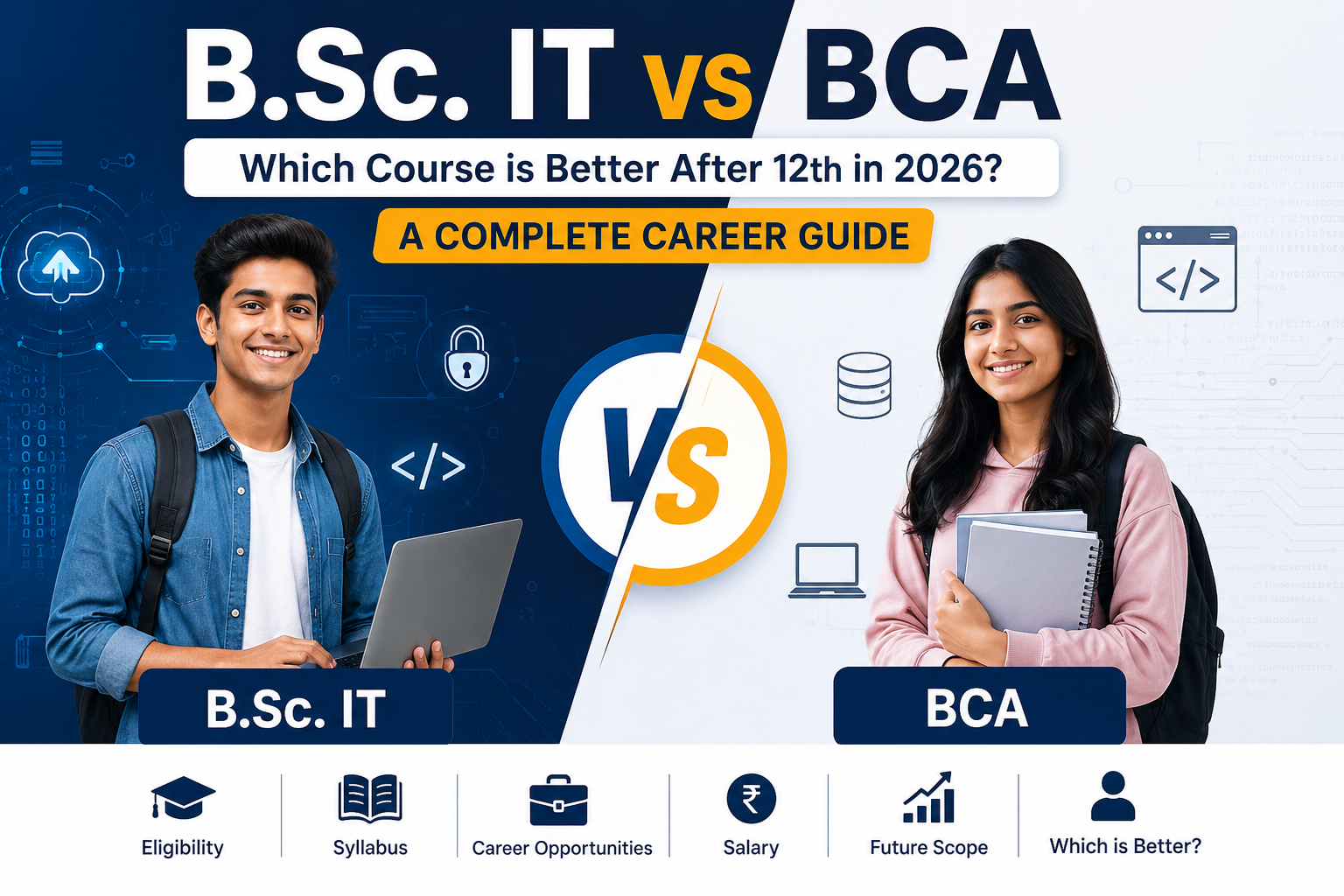
B.Sc. IT vs BCA: Quick Comparison
| Feature |
B.Sc. IT |
BCA |
| Duration |
3 Years |
3 Years |
| Course Type |
Science & Information Technology |
Computer Applications |
| Main Focus |
IT Infrastructure & Technology |
Programming & Software Development |
| Programming |
Moderate to Advanced |
Advanced |
| Networking |
Extensive |
Basic |
| Cyber Security |
Included |
Limited |
| Cloud Computing |
Included |
Basic |
| Database Management |
Yes |
Yes |
| Career Scope |
Very High |
Very High |
Eligibility Criteria
Both B.Sc. IT and BCA programs are generally open to students who have completed Class 12 from a recognized board. Eligibility requirements may vary depending on the institution. Students should check the specific admission criteria prescribed by the college or university before applying.
Subjects You'll Study in B.Sc. IT
- Programming in C & C++
- Python Programming
- Java Programming
- Operating Systems
- Computer Networks
- Database Management Systems
- Cloud Computing
- Cyber Security
- Web Technologies
- Software Engineering
- Artificial Intelligence Basics
- Data Analytics
Subjects You'll Study in BCA
- C Programming
- Java
- Python
- Data Structures
- Operating Systems
- Software Development
- Web Designing
- Computer Graphics
- Mobile Application Development
- Database Systems
- Object Oriented Programming
Which Course Offers Better Practical Learning?
Both programs emphasize practical learning, but B.Sc. IT provides broader exposure to networking, cloud computing, cybersecurity, IT infrastructure, and modern enterprise technologies. Students gain hands-on experience through laboratories, live projects, and internships that prepare them for diverse IT roles.
BCA focuses more on application development, coding, and software programming, making it an excellent choice for students who enjoy software development and programming-intensive careers.
Career Opportunities After B.Sc. IT
The demand for Information Technology professionals continues to grow across industries such as software development, banking, healthcare, education, e-commerce, manufacturing, telecommunications, and government organizations. B.Sc. IT graduates can explore a wide range of technical and managerial roles depending on their interests and skills.
| Career Option |
Job Responsibilities |
| Software Developer |
Develop, test, and maintain software applications for businesses and organizations. |
| Web Developer |
Create responsive websites, web portals, and web applications. |
| Cloud Support Engineer |
Manage cloud infrastructure and cloud-based services. |
| Cyber Security Analyst |
Protect computer systems and networks from cyber threats. |
| Network Administrator |
Maintain computer networks and ensure smooth connectivity. |
| Database Administrator |
Manage organizational databases and ensure data security. |
| System Administrator |
Install, configure, and maintain IT systems. |
| IT Support Engineer |
Provide technical support and troubleshoot IT-related issues. |
| Data Analyst |
Analyze business data and generate useful insights. |
| Software Tester |
Test software applications to ensure quality and performance. |
Career Opportunities After BCA
BCA graduates primarily build careers in software development, application programming, mobile application development, and web technologies. Students interested in coding and software engineering often prefer this career path.
- Software Developer
- Application Developer
- Web Developer
- Mobile App Developer
- Software Tester
- Database Developer
- Technical Support Executive
- UI/UX Developer
- Game Developer
- Business Analyst
Salary Comparison: B.Sc. IT vs BCA
Salary packages depend on technical skills, certifications, location, company, internship experience, and individual performance. Continuous learning and industry certifications significantly improve career growth.
| Job Role |
Average Starting Salary |
| Software Developer |
₹4 – ₹8 LPA |
| Web Developer |
₹3 – ₹6 LPA |
| Cyber Security Analyst |
₹5 – ₹9 LPA |
| Cloud Engineer |
₹6 – ₹12 LPA |
| Network Administrator |
₹3.5 – ₹6 LPA |
| Database Administrator |
₹5 – ₹10 LPA |
| System Administrator |
₹4 – ₹7 LPA |
| Data Analyst |
₹5 – ₹10 LPA |
Skills You Should Develop During Your Degree
Regardless of whether you choose B.Sc. IT or BCA, developing practical technical skills is essential for career success. Employers today look for professionals who possess both technical expertise and strong problem-solving abilities.
- Programming (Python, Java, C++, JavaScript)
- Database Management (MySQL, SQL Server)
- Cloud Computing Basics
- Cyber Security Fundamentals
- Networking Concepts
- Web Development
- Communication Skills
- Problem Solving
- Analytical Thinking
- Team Collaboration
- Project Management
- Time Management
Future Scope in 2026
The future of Information Technology remains highly promising. Emerging technologies such as Artificial Intelligence (AI), Machine Learning, Cloud Computing, Data Science, Cyber Security, Blockchain, and the Internet of Things (IoT) are creating thousands of new career opportunities every year.
Professionals with practical knowledge, industry certifications, internships, and hands-on project experience will continue to remain in high demand across India and globally.
- Artificial Intelligence
- Machine Learning
- Cloud Computing
- Cyber Security
- Data Science
- Internet of Things (IoT)
- DevOps
- Software Engineering
- Blockchain Technology
- Full Stack Development
Why Choose Himalayan Institute of Design & Technology (HIDT) for B.Sc. IT?
Choosing the right college is just as important as choosing the right course. At the Himalayan Institute of Design & Technology (HIDT), the Bachelor of Science in Information Technology (B.Sc. IT) program is designed to equip students with the technical expertise, practical experience, and professional skills required to excel in today's fast-growing IT industry.
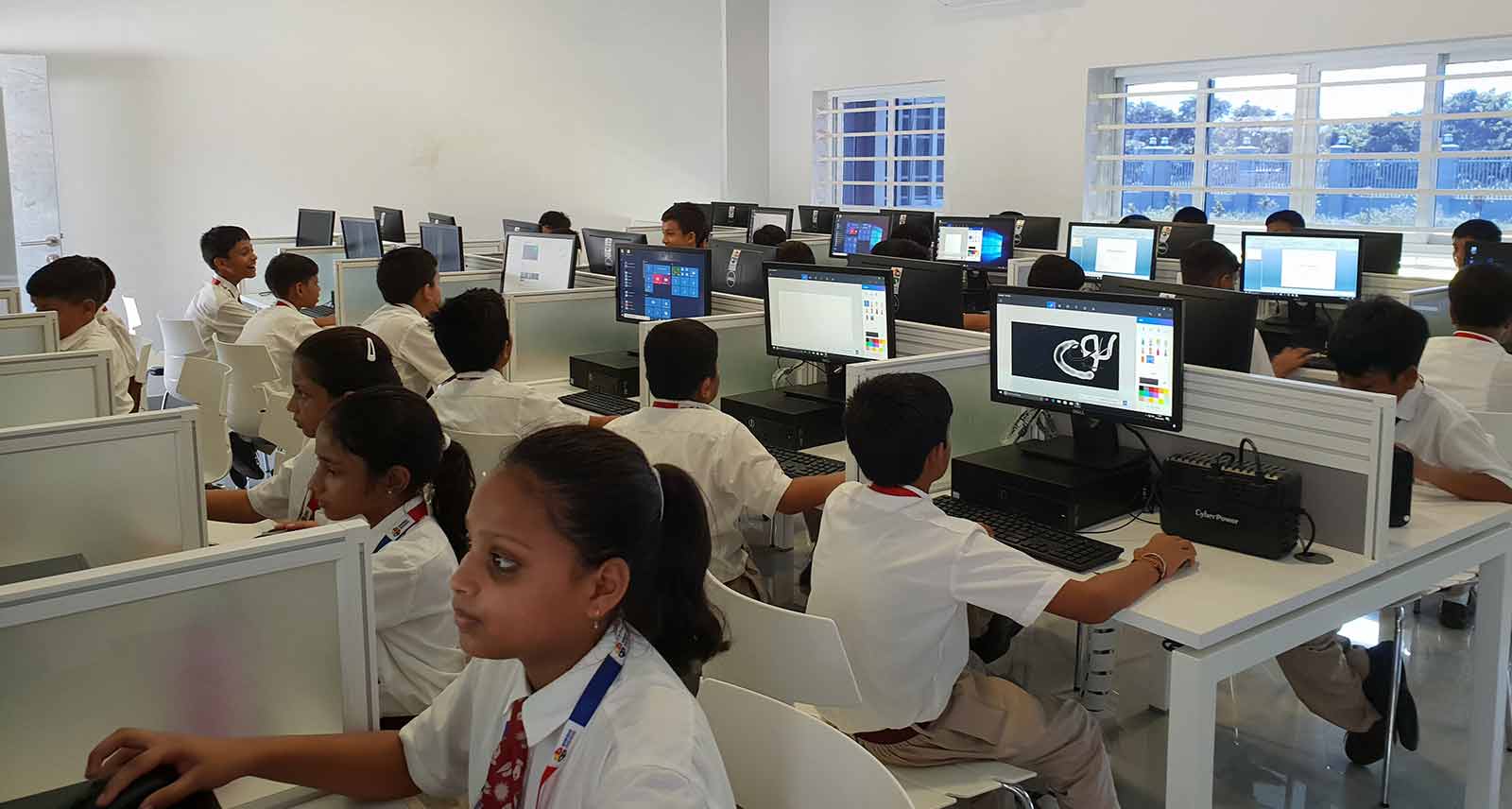
The curriculum is aligned with current industry trends and focuses on emerging technologies such as cloud computing, cybersecurity, web development, database management, software engineering, and programming. Students gain both theoretical knowledge and hands-on practical experience through modern computer laboratories, live projects, workshops, and industry interactions.
| HIDT Advantage |
Student Benefits |
| Industry-Oriented Curriculum |
Learn the latest technologies and tools used in the modern IT industry. |
| Experienced Faculty |
Get guidance from qualified and experienced educators with strong academic and industry knowledge. |
| Modern Computer Laboratories |
Hands-on practical training using updated software, programming tools, and computing resources. |
| Project-Based Learning |
Develop practical skills by working on real-world assignments and academic projects. |
| Programming & Technical Training |
Build strong coding skills in languages such as C, C++, Java, Python, HTML, CSS, JavaScript, and SQL. |
| Industry Workshops & Seminars |
Interact with industry experts and stay updated with the latest technological advancements. |
| Soft Skills Development |
Enhance communication, teamwork, leadership, and problem-solving abilities. |
| Internship Opportunities |
Gain valuable industry exposure through internships with reputed organizations. |
| Career Guidance |
Receive professional mentoring for higher education, certifications, and career planning. |
| Placement Assistance |
Dedicated placement support to help students secure rewarding career opportunities. |
Beyond academics, HIDT encourages students to participate in technical events, coding competitions, seminars, workshops, innovation projects, and extracurricular activities that enhance their confidence and overall personality. This holistic learning approach ensures that graduates are well-prepared to meet the evolving demands of the global IT industry.
Why Students Prefer HIDT
- ✔ Industry-focused B.Sc. IT curriculum
- ✔ Practical and project-based learning approach
- ✔ Experienced faculty and expert mentorship
- ✔ Modern computer labs and advanced infrastructure
- ✔ Internship and placement assistance
- ✔ Personality development and communication skills training
- ✔ Career guidance for higher studies and certifications
- ✔ Supportive learning environment with holistic development
If you aspire to build a successful career in software development, cloud computing, cybersecurity, networking, data analytics, or other emerging IT domains, the B.Sc. IT program at Himalayan Institute of Design & Technology (HIDT) provides the knowledge, practical exposure, and career support needed to achieve your professional goals.
Frequently Asked Questions (FAQs)
What is better after 12th, B.Sc IT or BCA?
Both B.Sc IT and BCA are excellent career-oriented programs. B.Sc IT focuses more on information technology, networking, cybersecurity, cloud computing, and IT infrastructure, while BCA mainly focuses on software development and computer applications. The right choice depends on your career goals and interests.
Which course has better career opportunities, B.Sc IT or BCA?
Both courses provide excellent career opportunities in the IT sector. B.Sc IT graduates can explore careers in software development, cybersecurity, cloud computing, networking, data analytics, and IT management. BCA graduates mainly focus on software development, application development, and programming careers.
Can B.Sc IT graduates become software developers?
Yes, B.Sc IT graduates can become software developers. The course includes programming languages, software engineering, database management, web technologies, and practical projects that help students develop software development skills.
Is B.Sc IT a good career option in 2026?
Yes, B.Sc IT is a promising career option in 2026 due to the increasing demand for professionals in areas like artificial intelligence, cloud computing, cybersecurity, data science, software development, and digital technologies.
Why choose B.Sc IT at HIDT Dehradun?
HIDT Dehradun offers a career-focused B.Sc IT program with practical learning, experienced faculty, modern computer laboratories, industry-oriented curriculum, workshops, internships, and placement assistance to prepare students for IT careers.
Conclusion
Both B.Sc. Information Technology (B.Sc. IT) and Bachelor of Computer Applications (BCA) are excellent undergraduate programs that offer promising career opportunities in the rapidly growing IT industry. The right choice ultimately depends on your interests, career aspirations, and the skills you wish to develop.
If you are interested in gaining comprehensive knowledge of information technology, networking, cloud computing, cybersecurity, database management, and modern software technologies, B.Sc. IT provides a broader technical foundation. On the other hand, if your primary interest lies in software development and application programming, BCA can be an ideal choice.
With the increasing demand for skilled IT professionals across sectors such as software development, artificial intelligence, cloud computing, data science, cybersecurity, fintech, healthcare, and e-commerce, graduates from both programs have excellent career prospects. However, success in the IT industry depends not only on the degree you choose but also on your technical skills, practical experience, certifications, internships, and commitment to continuous learning.
At Himalayan Institute of Design & Technology (HIDT), the B.Sc. IT program is designed to provide students with industry-oriented education, practical training, experienced faculty, modern laboratories, live projects, and placement assistance. The institute focuses on developing both technical expertise and professional skills, ensuring that graduates are well-prepared for the challenges of the modern digital world.
Ready to Build Your Career in Information Technology?
Take the first step toward a successful future with the B.Sc. IT program at Himalayan Institute of Design & Technology (HIDT). Gain practical knowledge, industry exposure, and the skills required to excel in today's competitive technology landscape.
Admissions Open for 2026. Start your journey toward becoming a future-ready IT professional with HIDT.




_21Oct24_114818.jpg)